Hurghada boasts numerous luxury resorts, being a popular destination for travelers worldwide that combines stunning natural beauty with premium hospitality. These resorts offer exceptional accommodations blending luxury, relaxation, and diverse leisure activities—making Hurghada ideal for those seeking upscale tranquility.
Luxury Resorts in Hurghada
Unique Luxury Accommodations with Breathtaking Views
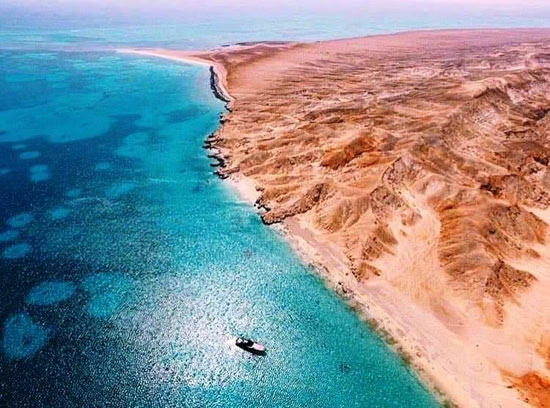
Hurghada’s luxury resorts are distinguished by their prime Red Sea locations, featuring panoramic vistas of turquoise waters and golden sands. Guests enjoy contemporary-style rooms and suites equipped with modern amenities like private pools, spacious terraces, and impeccable service.
Gourmet Dining with International Cuisine
The resorts host elegant restaurants serving global delicacies—fresh seafood, Oriental dishes, Italian, and Asian cuisine—all in sophisticated, serene settings.
Luxury Resorts in Hurghada
Leisure Activities at Hurghada’s Luxury Resorts
Beyond accommodation, these resorts provide a wealth of experiences:
Swimming in expansive pools with sea views
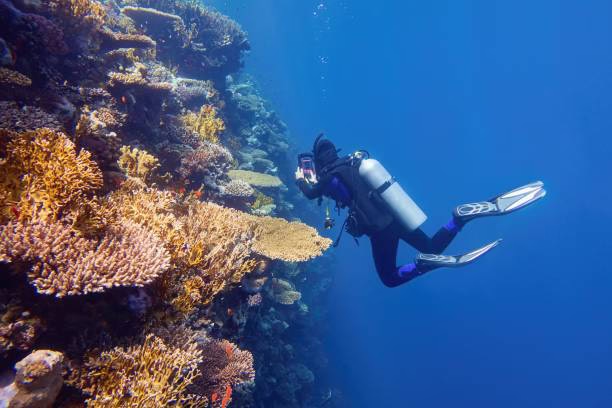
Water sports (diving, snorkeling) to explore vibrant coral reefs
Red Sea cruises aboard luxury yachts
Spas offering massages and beauty treatments with aromatic oils
State-of-the-art fitness centers and sports facilities
Luxury Resorts in Hurghada
World-Class Service for an Unforgettable Stay
Staff cater to every guest need with top-tier standards, ensuring memorable moments—whether lounging on private beaches, savoring gourmet meals, or indulging in leisure pursuits.
Luxury Resorts in Hurghada
Top Luxury Resorts in Hurghada
Steigenberger Al Dau Beach Resort
Location: Private beach, tropical gardens
Features: Expansive pools, golf course, luxury spa, international dining
Rixos Premium Magawish Resort
All-inclusive luxury with sea-view suites
Amenities: Multiple pools, premium spa, water sports
Savoy Hurghada Resort
Blend of luxury and comfort: Sea-view rooms, fitness center, diverse activities
Highlight: Exceptional service and guest comfort
Sunrise Romance Resort
Ideal for couples/families: Private beaches, spa treatments, modern suites
Dining: International restaurants, stunning pools
Mövenpick Resort Hurghada
Private beach location with lush greenery
Activities: Sports facilities, diving centers, global cuisine
A Luxury Destination for Unforgettable Holidays
Hurghada’s finest resorts merge opulence, adventure, and relaxation—perfect for beachside serenity, water sports, or culinary journeys amid the Red Sea’s magic.
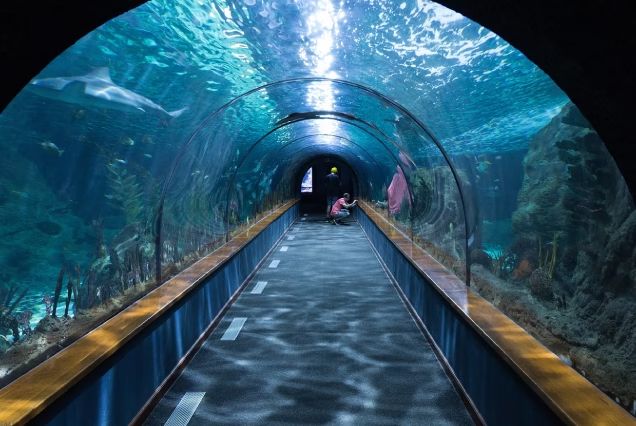
The Hurghada Grand Aquarium is one of the largest aquariums in Egypt and the Middle East. This spectacular destination offers marine life enthusiasts an immersive experience exploring ocean ecosystems through diverse aquatic species and realistic natural habitats.
Egypt Tour confirms the aquarium as a premier attraction for discovering marine life without diving. Visitors can observe underwater worlds across 24 massive tanks replicating different marine environments.
Dolphin House off the coast of Hurghada is one of the most magical places in the Red Sea. Here, visitors can swim with wild dolphins, snorkel, or simply observe these intelligent marine mammals in their natural environment. This article delves into the world of Dolphin House, exploring its ecological significance, the best activities, and tips for an unforgettable experience.
Dolphin House in Hurghada
Location and significance of Dolphin House Geographical position: Approximately 12 km north of Hurghada, near the Giftun Islands.
Natural habitat: Shallow lagoons and coral reefs, ideal for dolphins.
Dolphin House in Hurghada
Inhabitants: Mainly bottlenose dolphins (Tursiops truncatus), known for their curiosity and friendliness towards humans.
The dolphins of Hurghada: behavior and protection a) Social structure of dolphins Live in groups (“pods”) of 5–15 animals.
Communicate through clicks and body language.
b) Ecological significance Dolphins are indicators of a healthy marine system.
c) Protective measures Egyptian laws: minimum distance from boats (30 m).
Responsible tours: no feeding, no touching the animals.
Dolphin House in Hurghada
Activities at Dolphin House a) Snorkeling with dolphins Best time: in the morning (9–11 a.m.), when the dolphins are active.
Rules of conduct:
Do not chase them!
Move slowly so as not to scare the animals.
b) Dives Depth: 5–15 m, perfect for beginners.
What you will see: In addition to dolphins, turtles, reef sharks, and colorful fish.
c) Boat trips & observation Glass-bottom boats: Ideal for families with children.
Photo tips: Bring an underwater camera!
Choosing the right Dolphin House tour a) Recognizing reputable providers Certified diving schools (e.g., PADI or SSI members).
Small groups (max. 10 people per guide).
b) How much does it cost? Price range: $50–$120 (depending on what is included).
Included: Lunch, snorkeling equipment, guide.
c) What to wear? Wetsuit (protection against sun and jellyfish).
Life jacket for those who are unsure.
Ethical issues & sustainability a) Should you swim with dolphins? Pros: Raising awareness for species conservation.
Cons: Stress for animals due to mass tourism.
b) Alternatives to free dolphins Dolphinella (Hurghada): Controversial dolphinarium.
Better: Whale watching tours in the Red Sea.
Conclusion The Dolphin House is a unique place that demands respect and responsibility. Those who follow the rules will be rewarded with a magical experience – and help to ensure that these wonderful animals are preserved for future generations.
Hurghada, one of Egypt’s most popular tourist cities, is not only known for its vibrant resorts, but also for its breathtaking islands in the Red Sea. These islands—including Giftun, Abu Minqar, and the Magawish Islands—offer crystal-clear waters, vibrant coral reefs, and a rich underwater world. This article explores the beauty, ecology, and tourist activities of this unique archipelago.
The Hurghada Islands
The main islands of Hurghada a) Giftun Islands Location: Only 45 minutes by boat from Hurghada.
Special features:
Giftun Kebir: Known for its white sandy beaches and snorkeling spots.
Giftun Soraya: A protected nature reserve with rare bird species.
b) Abu Minqar An unspoiled diving paradise with steep walls and sharks.
c) Magawish Island Ideal for those seeking peace and quiet with private beaches and luxury resorts.
The Hurghada Islands
Flora and fauna: An ecosystem teeming with life Coral reefs: Over 200 species, including Acropora and fire corals.
Marine life:
Dolphins (especially at Sataya Reef).
Turtles (endangered species such as the green sea turtle).
Reef sharks (harmless whitetip reef sharks).
Bird life: Flamingos and terns on uninhabited islands.
The Hurghada Islands
Tourist activities a) Snorkeling & diving Top spots:
Careless Reef (colorful schools of fish).
El Fanadir (wrecks and rays).
b) Boat trips & water sports Glass-bottom boats for non-swimmers.
Parasailing & jet skiing for adrenaline lovers.
c) Ecotourism & sustainability Environmental projects: coral restoration by local diving centers.
Rules for visitors: no touching the coral, no littering.
Climate & best time to travel Ideal months: March–May & September–November (pleasant 25–30°C).
Water temperature: 22–28°C, perfect for water sports.
To be avoided: July & August (extreme heat above 40°C).
How to get to the islands? Organized tours: From Hurghada Marina.
Private charter: For exclusive excursions.
Prices: Between €30 (group tour) and €200 (private boat).
Conclusion The Hurghada Islands are a must for nature and diving enthusiasts. With their unique marine life and diverse leisure activities, they offer the perfect vacation experience – whether you’re looking for action or relaxation.
The Temple of Karnak in Luxor is one of the most impressive structures of ancient Egypt. As the largest temple complex in the world, it was the religious center of the cult of Amun for over two millennia. With its gigantic colonnades, obelisks, and statues, it reflects the power and beliefs of the pharaohs. This article explores the history, architecture, and significance of the Temple of Karnak.
The Temple of Karnak
Historical development
Construction of the Temple of Karnak began in the Middle Kingdom (around 2000 BC) and was expanded over more than 1500 years. Almost every important pharaoh left his mark here:
Thutmose III built the famous festival temple.
Hatshepsut had two huge obelisks erected.
Ramses II added monumental statues and pylons.
The Ptolemies finally completed some of the last structures.
The temple was not only a place of worship, but also a symbol of political power.
Architecture and structure
The Karnak Temple consists of three main areas:
The Amun district (the largest part with the Hypostyle Hall)
The Mut district (dedicated to the goddess Mut)
The Month district (for the god of war, Month)
Notable structures:
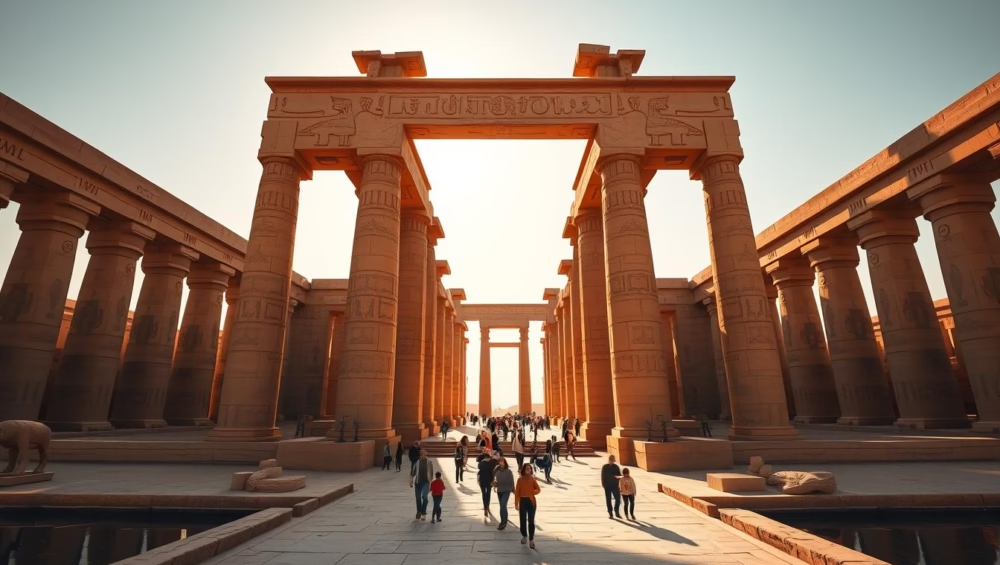
The Great Hypostyle Hall: With 134 columns up to 24 meters high.
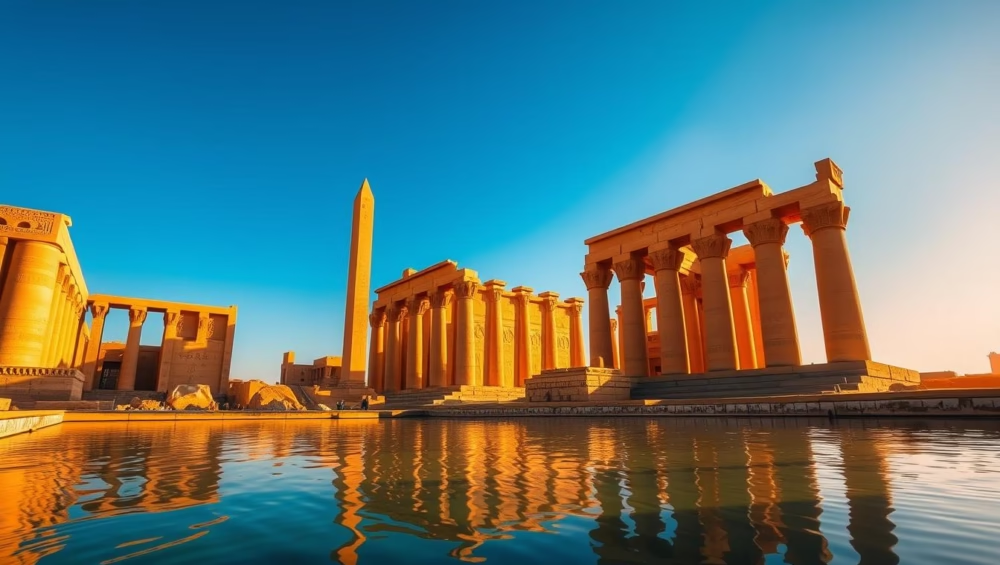
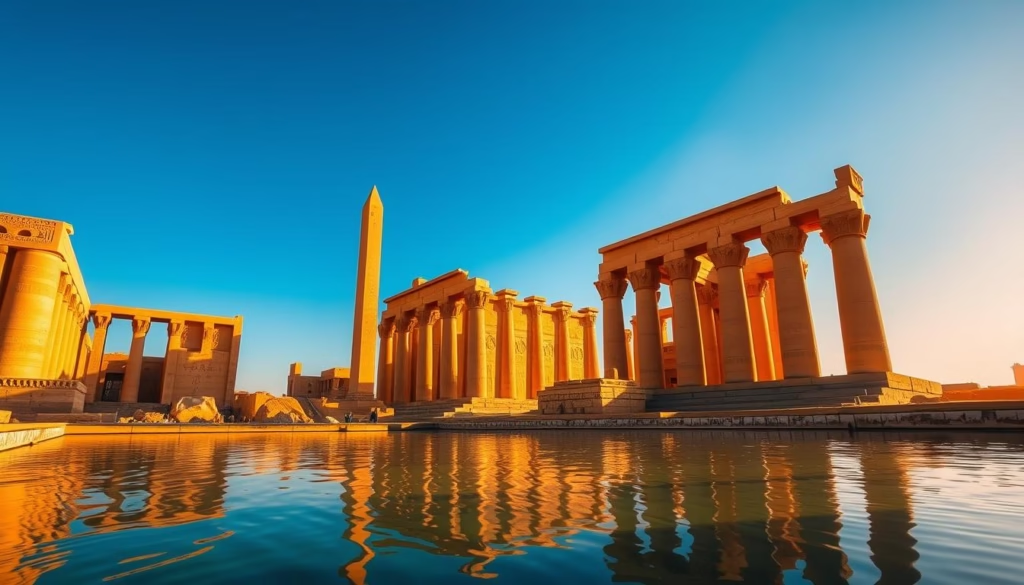
The Sacred Lake: An artificial lake for ritual washings.
The Avenue of Sphinxes: Connects Karnak with the Luxor Temple.
Religious significance
Karnak was the center of the cult of Amun, one of the most important gods in Egypt. Major festivals were held here, such as the Opet Festival, during which statues of the gods were carried in procession to the Luxor Temple. The priests of Karnak wielded immense political power and controlled vast estates.
The Temple of Karnak
Discovery and modern significance
After the decline of ancient Egypt, Karnak was buried by sand and only systematically explored in the 19th century. Today, it is one of Egypt’s most important tourist attractions and a UNESCO World Heritage Site. Archaeologists continue to work on unraveling the mysteries of the temple.
Conclusion
The Karnak Temple is not only an architectural marvel, but also a testament to Egypt’s religious and political history. Its monumental structures fascinate visitors and researchers alike, making it one of the most important ancient sites in the W.
Egypt, the “Land of the Pharaohs,” boasts one of the world’s oldest and most captivating cultures. With a history spanning 5,000 years, it has profoundly influenced art, architecture, religion, and science. This article explores Egypt’s cultural milestones—from the pyramids to modern music.
Egyptian Culture
1. Ancient Egypt – The Cradle of Civilization
1.1 Pharaohs and Divine Pantheon
Governance: Pharaohs were god-kings, mediators between deities and humans.
Key Deities:
Ra (Sun God)
Isis (Goddess of Magic)
Anubis (God of Mummification)
1.2 Monumental Architecture
Pyramids of Giza (Ancient Wonder, Pharaohs’ Tombs)
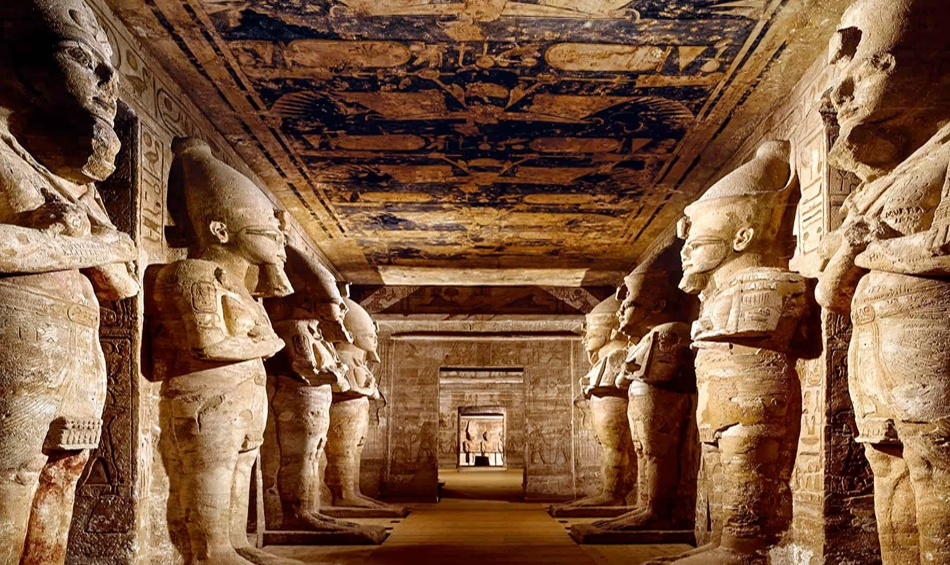
Temple Complexes (Karnak, Luxor, Abu Simbel)
The Sphinx – Symbol of Power
1.3 Writing and Science
Hieroglyphs (Among the earliest scripts)
Medicine (Pioneering surgical techniques)
Astronomy (Calendar system)
2. Egypt Under Foreign Rule – Greco-Roman Influences
2.1 Ptolemaic Period (332–30 BCE)
Alexandria emerged as a cultural hub.
Library of Alexandria – Ancient knowledge repository.
2.2 Roman and Byzantine Era
Spread of Christianity (Rise of the Coptic Church).
Egyptian Culture
3. Islamic Golden Age – Arab Culture and Architecture
3.1 Advent of Islam (7th Century)
Cairo flourished under the Fatimids.
Al-Azhar University (Among the world’s oldest).
3.2 Mamluks and Ottomans
Mosques like Ibn Tulun.
Bazaar Culture (Khan el-Khalili).
4. Modern Culture – Tradition Meets Globalization
4.1 Literature and Film
Naguib Mahfouz (Nobel Prize-winning author).
Egyptian Cinema (“Golden Age” in the 1950s).
4.2 Music and Dance
Umm Kulthum – Iconic vocalist.
Tanoura Dance (Sufi-inspired).
4.3 Daily Life
Teahouses as social hubs.
Traditional Festivals (Ramadan, Sham el-Nessim).
Egyptian Culture
5. Preserving Egypt’s Heritage – Challenges Today
Tourism as an economic pillar.
Looting vs. Conservation of antiquities.
Conclusion
Egypt’s culture is a mosaic of pharaonic legacy, Islamic art, and contemporary life. Its impact endures globally—in architecture, religion, and pop culture.
Egypt is renowned not only for its pyramids and the Nile, but also for its unique desert landscapes. Among the most fascinating are the White Desert (“El-Sahara el-Beida”) and the Black Desert (“El-Sahara el-Soda”). Located in the country’s western region, these areas feature surreal rock formations, geological wonders, and an almost otherworldly atmosphere. This article explores their formation, distinctive features, and significance for tourism.
The White and Black Deserts of Egypt
1. The White Desert – A Limestone Fairytale
1.1 Location & Access
Located approximately 500 km southwest of Cairo near Farafra, the White Desert is part of the White Desert National Park and a popular destination for desert safaris.
1.2 Geology & Landscape
The desert’s name derives from its chalk-white rock formations, shaped by wind and sand erosion. Millions of years ago, the area was submerged under a sea, leaving behind limestone and chalk deposits. Today, visitors can see:
Mushroom rocks (formed by harder rock layers at the top)
Surreal sculptures (e.g., “Chicken Rock” or “The Mushroom”)
Vast, glowing-white plains that appear magical under moonlight
1.3 Flora & Fauna
Despite the arid climate, the desert supports:
Fennec foxes
Desert jerboas
Rare desert plants like acacias
1.4 Tourism
Overnight camping under the stars (especially during full moon)
Photography (dramatic sunrises and sunsets)
Adventure tours with 4×4 vehicles
The White and Black Deserts of Egypt
2. The Black Desert – Volcanic Forces
2.1 Location & Access
Situated north of the White Desert near the Bahariyya Oasis.
2.2 Geology & Landscape
Its dark appearance results from volcanic activity:
Black basalt covering golden sand
Impact craters and fossilized lava flows
Djebel el-Engleez Mountain (an eroded volcano)
2.3 Unique Features
Fossil discoveries (e.g., petrified corals)
Striking color contrasts (black stones on golden dunes)
2.4 Tourism
Scenic viewpoints like English Mountain
A hotspot for geologists
3. Comparing the Two Deserts
Feature
White Desert
Black Desert
Color
White (limestone)
Black (basalt)
Formation
Marine deposits
Volcanic activity
Atmosphere
Surreal, mystical
Smoky, primordial
Activities
Camping, photography
Hiking, fossil hunting
4. Importance for Ecotourism
Both deserts are UNESCO-protected and attract nature enthusiasts. Key considerations:
Sustainable tours (leave no trace)
Support local guides (e.g., Bedouins from Bahariyya)
Conclusion
Egypt’s White and Black Deserts are natural wonders that showcase the diversity of desert landscapes. While the White Desert resembles a moonscape, the Black Desert evokes a post-apocalyptic scene. Both are must-visit destinations for travelers seeking Egypt’s authentic beauty beyond typical tourist paths.
Egypt’s temple complexes, particularly Dendera & Abydos, are invaluable windows into the nation’s rich history and culture. These sites attract visitors worldwide, offering profound insights into ancient Egyptian civilization.
Historical Significance of Dendera & Abydos
Dendera Temple (Hathor Temple): Exceptionally preserved, dedicated to Hathor—goddess of love, music, and dance.
Abydos Temple: Renowned for its architecture and religious importance in ancient Egyptian cosmology.
Guided tours led by experts reveal these temples’ archaeological and spiritual layers, enhancing our understanding of pharaonic society.
The Hathor Temple of Dendera
Key Features:
Architecture: Intricate reliefs and hieroglyphs depicting myths and rituals.
Astronomical Ceiling: A masterpiece illustrating celestial knowledge, linking religion and science.
Crypts: Underground chambers used for sacred rituals, now open for exploration.
Conservation:
Recent restoration efforts preserve the temple’s vibrant colors and structural integrity.
The Osiris Temple at Abydos
Highlights:
Location: Adjacent to the main Abydos Temple, a key archaeological site.
Architecture: Unique design distinguishing it from other Egyptian temples.
Religious Role: Central to Osiris worship and funerary rites.
Preservation:
Joint Egyptian-international initiatives maintain the temple’s condition.
The Abydos King List
Function: Chronicles Egypt’s royal dynasties.
Cultural Insight: Demonstrates the fusion of monarchy and divinity.
Hieroglyphs & Reliefs: Visual Narratives
Temple walls feature:
Depictions of gods and pharaohs.
Scenes of daily life and ceremonies. Scholarly translations continue to decode these historical records.
From Luxor: 1.5-hour drive to Dendera; 2.5 hours to Abydos.
Options: Private cars, guided tours, or public buses.
Accommodation:
Luxor: Hotels like Hilton Luxor or boutique guesthouses.
Near Abydos: Mid-range options in El-Balyana.
Cultural Etiquette:
Dress Code: Cover shoulders/knees in sacred areas.
Behavior: Respect no-photography zones; use right hand for greetings.
Nearby Sites:
Edfu Temple (Horus Temple).
Kom Ombo (Dual Sobek-Horus Sanctuary).
Photography Tips:
Golden hour (sunrise/sunset) for optimal lighting.
Tripods permitted in designated areas.
Conclusion
Dendera and Abydos epitomize ancient Egypt’s spiritual and architectural genius. From Hathor’s celestial ceiling to Abydos’ royal legacy, these temples are essential for history enthusiasts. Proper planning ensures a seamless journey into antiquity.
FAQ
1. Why are Dendera & Abydos significant?
Dendera: Hathor worship; Abydos: Osiris cult and royal chronicles.
2. What makes Dendera’s ceiling unique? Its advanced astronomical depictions.
3. Can visitors enter the Dendera crypts? Yes, accessible via guided tours.
4. How to reach Abydos from Luxor? Private transfer (2.5 hours) or organized tour.
5. Dress code for temples? Modest attire; hats/sunscreen recommended.
Egypt is a premier diving destination, offering unique underwater landscapes with vibrant coral reefs, colorful fish, and historic shipwrecks. With year-round ideal conditions—clear visibility and comfortable water temperatures—it caters to divers of all levels.
Diving Highlights
Red Sea: A diver’s paradise with diverse marine life, including sharks, dolphins, and exotic fish.
Top Dive Sites:
Sharm El Sheikh: Ras Mohammed National Park, Tiran Strait, SS Thistlegorm wreck.
Hurghada: Gateway to numerous reefs with accessible dive centers.
Marsa Alam: Pristine sites like Dolphin House and Elphinstone Reef.
Practical Information
Best Time to Dive:
April–October: Optimal visibility and warm waters (24–30°C).
Equipment & Rentals:
Gear readily available for rent (masks, regulators, wetsuits).
Recommended for advanced divers: Bring specialized equipment.
Diving in Egypt
Safety & Regulations:
Dive insurance recommended.
Follow local protocols; decompression chambers available in major hubs.
Accommodations:
Dive Resorts: All-inclusive packages (e.g., Sharm El Sheikh).
Liveaboards: Multi-day trips to remote sites.
Environmental Responsibility
Adhere to eco-diving practices to protect reefs.
Support marine conservation initiatives.
Combining Culture & Diving
Pair diving with visits to Luxor’s temples or Cairo’s pyramids.
Underwater Photography
Capture vibrant coral gardens and marine life—ideal for macro and wide-angle shots.
FAQ
1. Why dive in Egypt? Unmatched coral reefs, historic wrecks, and year-round diving conditions.
2. Certification options? PADI/SSI courses available for all levels.
3. Budget tips? Book dive packages; visit in shoulder seasons (April/October).
4. Visa requirements? Tourist visa required; check latest entry rules.
5. Eco-friendly diving? Avoid touching coral; use reef-safe sunscreen.
The Karnak Temple is a UNESCO World Heritage Site and an impressive monument of ancient Egypt. For centuries, it has attracted visitors from around the world. This temple is a breathtaking experience.
The Karnak Temple in Egypt is a must-visit for history and architecture enthusiasts. As a UNESCO World Heritage Site, it showcases Egypt’s rich history and culture.
The Karnak Temple: An Overview of Ancient Egypt’s Largest Sanctuary
The Karnak Temple is located near Luxor. It is a remarkable testament to the history of ancient Egypt. The temple complex in Luxor is renowned for its size and significance during the pharaonic era.
The name “Karnak” derives from the Arabic term for the temple. The temple was a significant site for the pharaohs and played a central role in ancient Egyptian history.
The Karnak Temple
The Meaning of the Name “Karnak”
The name “Karnak” is closely tied to the temple’s history. The temple complex in Luxor was an important site for the pharaohs, and the name reflects this significance.
Geographic Location and Surroundings
The Karnak Temple is situated near Luxor. It is surrounded by a landscape that mirrors the history of ancient Egypt. The temple complex in Luxor is neighbored by other historical sites documenting the pharaonic era.
Historical Significance in Ancient Egypt
The Karnak Temple played a central role in ancient Egyptian history. The pharaonic era was marked by the temple’s importance, as it served as a key site for the pharaohs.
Architectural Evolution Over Three Millennia
The Karnak Temple in Egypt demonstrates the impressive architecture of ancient Egypt. Constructed and expanded over three millennia, it reflects architectural developments across different eras.
The temple’s architecture showcases various epochs and styles, from the early pharaohs to the Roman period. Continuous modifications and expansions explain its unique design.
Key features of its development include:
Use of columns and pillars.
Construction of halls and chambers.
Decorative hieroglyphs and reliefs.
Integration of sacred lakes and processional pathways.
The archaeology of the Karnak Temple provides insights into Egypt’s history and culture. The temple stands as evidence of architectural evolution and is a vital part of Egyptian temple architecture.
The Karnak Temple
The Great Hypostyle Hall: The Heart of the Karnak Temple
The Great Hypostyle Hall is an awe-inspiring section of the Karnak Temple. It was a major site for religious ceremonies, drawing countless visitors from around the world.
The hall’s architecture is breathtaking, dominated by 134 monumental columns. These columns are not only architecturally significant but also deeply tied to religious traditions.
The 134 Monumental Columns
The sandstone columns reach heights of up to 13 meters and are adorned with hieroglyphs and carvings depicting stories from ancient Egyptian history and mythology.
Light and Shadow Play
The Hypostyle Hall is famed for its striking interplay of light and shadow, created by the columns and sunlight. These effects are most dramatic in the early morning and late afternoon.
The Karnak Temple is a popular destination for travelers seeking history, architecture, and sacred sites. The Great Hypostyle Hall is a primary reason for the temple’s exceptional appeal.
The Sacred Lakes and Processional Pathways
At the heart of the Karnak Temple lie the sacred lakes and processional pathways. These elements were integral to the temple complex, serving ritual purposes and contributing to its UNESCO World Heritage status.
The sacred lakes were used for purification rites and other religious ceremonies. The processional pathways were reserved for pharaohs and dignitaries approaching the temple, offering a glimpse into Egypt’s rich history and culture.
The combination of sacred lakes and processional pathways makes the Karnak Temple unique. Visitors can stroll along these paths and explore the lakes, gaining insight into Egypt’s heritage. The temple is a must-see for anyone interested in Egypt’s history and culture, forming a key part of its UNESCO World Heritage.
Hieroglyphs and Wall Reliefs: History Carved in Stone
The hieroglyphs and wall reliefs of the Karnak Temple are a vital part of Egypt’s history. They narrate tales from the pharaonic era, providing insight into religious and historical events.
The most significant inscriptions and depictions adorn the temple walls and columns, helping scholars understand Egypt’s past and the pharaonic period.
Key aspects of these carvings include:
Depictions of gods and goddesses.
Accounts of historical events.
Use of symbols and hieroglyphs.
The hieroglyphs and reliefs at Karnak are unparalleled, showcasing ancient Egyptian culture and religion. They form an essential part of humanity’s cultural heritage.
The Temple’s Role in Religious Life
The Karnak Temple was central to ancient Egyptian religious practices, serving as a place of worship and ritual ceremonies.
Today, the temple attracts visitors worldwide who come to learn about Egypt’s history. It reveals how ancient Egyptians lived and worshipped.
The temple houses numerous sacred sites, offering spiritual significance and helping visitors understand its importance.
The Karnak Temple is not only of interest to historians but also to those drawn to ancient Egyptian spirituality.
Restoration and Preservation Efforts
The Karnak Temple is a priceless cultural treasure, requiring ongoing preservation and restoration. Archaeology plays a key role in protecting such temples.
Numerous projects focus on conserving the temple, including restoring columns, walls, hieroglyphs, and reliefs.
Current Projects
Restoration of columns and walls.
Conservation of hieroglyphs and reliefs.
Preservation of archaeological finds.
Conservation Challenges
Preserving the Karnak Temple is a complex task, requiring a balance between maintaining its original beauty and mitigating environmental factors like heat and humidity.
Visitor Information and Practical Tips
The Karnak Temple is a popular destination in Egypt, drawing millions annually. Here are some tips to enhance your visit.
Opening Hours and Ticket Prices
The temple is open daily from 6 AM to 5 PM. Ticket prices vary by season; advance booking is recommended to avoid long queues.
Best Times to Visit
Early mornings or late afternoons are ideal to avoid the midday heat and crowds.
Guided Tours
A local guide is highly recommended to fully appreciate the temple’s highlights and history.
The Sound and Light Show in the Evening
A highlight of visiting the Karnak Temple is the spectacular Sound and Light Show in the evening. This immersive experience delves into the temple’s history and significance, creating an unforgettable memory.
The show combines light, sound, and the temple’s structures to produce a mesmerizing atmosphere. It is a perfect way to conclude a day of exploration.
Photography at the Karnak Temple: Tips and Regulations
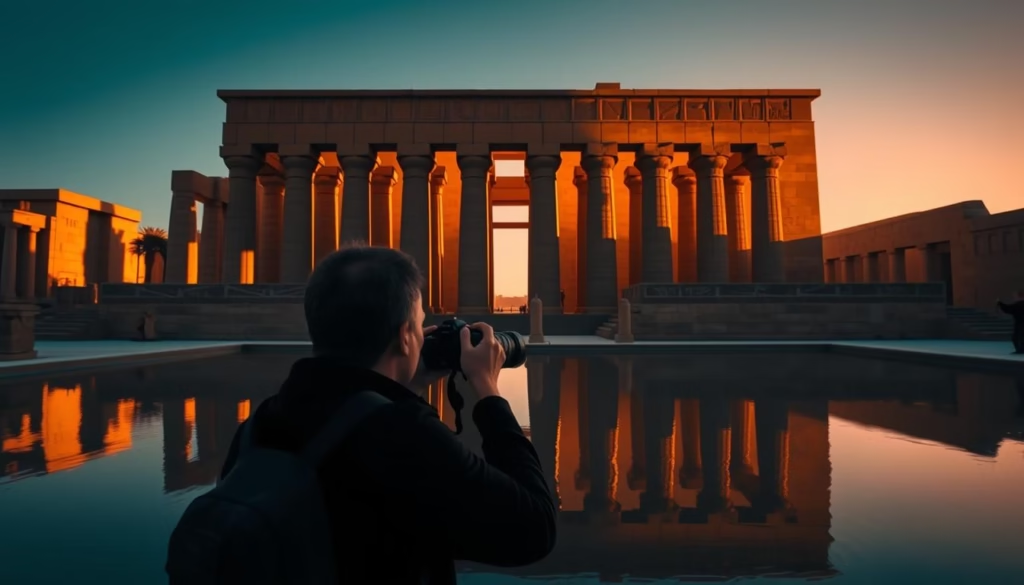
The Karnak Temple is a photographer’s dream, offering stunning architectural and historical subjects. Before shooting, familiarize yourself with the site’s photography rules to respect sacred areas and other visitors.
Best Photo Spots
The Great Hypostyle Hall.
The Sacred Lakes.
The Processional Pathways.
Technical Recommendations
Use a high-quality camera with a wide-angle lens. Early morning or late afternoon light provides the best conditions.
Connection to Other Historical Sites in Luxor
The Karnak Temple is one of many historical sites in Luxor, a city rich in ancient Egyptian heritage. Key nearby sites include:
The Luxor Temple.
The Valley of the Kings.
The Valley of the Queens.
Exploring these sites offers a comprehensive understanding of the pharaonic era.
The Karnak Temple
Local Legends and Mythology
The Karnak Temple is steeped in legends and mythology, reflecting the beliefs of ancient Egyptians. Its divine stories and folk traditions provide a fascinating glimpse into the past.
Modern Research and Archaeological Discoveries
Archaeological research at Karnak continues to uncover new insights into ancient Egyptian civilization. Modern techniques help decode the temple’s construction, symbolism, and societal role.
How to Plan Your Visit
To make the most of your trip to Egypt, plan your Karnak Temple visit carefully:
Recommended Routes
Start early to avoid crowds.
Follow a logical route to appreciate the temple’s layout and history.
Time Management
Allocate sufficient time to explore each section thoroughly.
Conclusion: A Timeless Monument of Egyptian Civilization
The Karnak Temple is a jewel of ancient architecture, symbolizing Egypt’s grandeur. As a UNESCO World Heritage Site, it embodies the nation’s history and spiritual traditions.
Its majestic halls and intricate reliefs offer a window into pharaonic civilization, leaving visitors captivated by its mystique.
FAQ
What is the Karnak Temple? The Karnak Temple is an ancient Egyptian monument and UNESCO World Heritage Site near Luxor, serving as a key site for pharaohs.
Where is the Karnak Temple located? It is situated in Luxor, on the east bank of the Nile.
When was the Karnak Temple built? Construction spanned over 2,000 years, beginning in the 11th Dynasty and continuing into the Roman era.
What are its architectural highlights? The Great Hypostyle Hall, sacred lakes, processional pathways, and hieroglyphic inscriptions.
What was its religious significance? It was a central site for worship and ceremonies in ancient Egypt.
How should I plan my visit? Visit early or late in the day, consider a guided tour, and allocate ample time.
What are the best photo opportunities? The Hypostyle Hall, sacred lakes, and processional pathways.
How is it connected to other Luxor sites? It is part of a larger historical ensemble, including the Luxor Temple and the Valleys of the Kings and Queens.